
hunchback explained: on disability & sex work
everyone is getting criticised by saou ichikawa's novella.

My purchase of Saou Ichikawa’s Hunchback was purely impulsive but totally justified as it was my birthday. I wish I could say I finished the 97-page novella in a day but it was Ramadan, so I had to pace myself to avoid reading the explicit scenes expected to come up whilst fasting.
Born with a congenital muscle disorder, Shaka Isawa has severe spine curvature and uses an electric wheelchair and ventilator. Within the limits of her care home, her life is lived online: she studies, she tweets indignantly, she posts outrageous stories on an erotica website. One day, a new male carer reveals he has read it all – the sex, the provocation, the dirt. Her response? An indecent proposal…
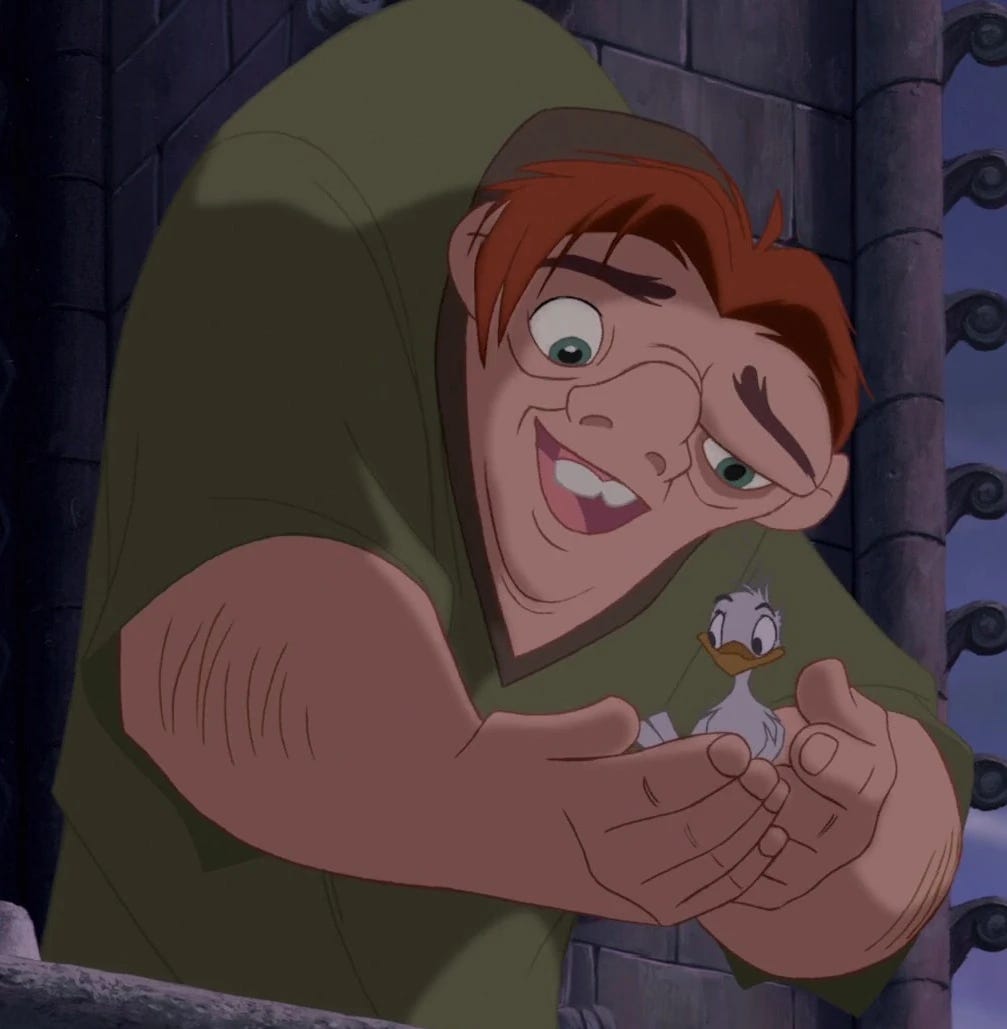
I hadn’t planned on buying a book that day - I simply went to Waterstones hoping I could use their toilet (they didn’t have one) - but ‘Hunchback’ instantly conjured the image of Quasimodo. I just had to know what kind of book was using his namesake.
After reading the synopsis, I was sold. I had yet to come across a book centering the sexuality of disabled women, so I was certain Hunchback would be a fresh read.
The rest of this article contains spoilers for Saou Ichikawa’s Hunchback - scroll at your own risk.
Shaka Isawa’s Story
Saou Ichikawa wasted no time to establish the duality of her protagonist’s life. She does this by starting the novella with a weird swingers scene (one of Shaka’s draft erotica pieces) that ends abruptly as Shaka closes the document and grabs her suction catheter to drain the mucus in her windpipe.
When Shaka feels the urge to pee, we get another detailed description of how she gets out of bed, affirming how even simple movements like this are dictated by her congenital muscle disorder.
After she comes back from the bathroom, Shaka opens her private Twitter account and we get to see some of her indignant tweets:
“I want to do the job in swingers’ clubs where you get to scatter condoms from the ceiling.”
“In another life, I’d like to work as a high-class prostitute.”
“I’m a 165 cm tall woman born to tall, attractive parents with platinum cards. If I wasn’t disabled, the world would have been my oyster… whatever that means.”
As Shaka takes us through her routine at Group Home Ingleside (the facility which her parents established and left under her name), we quickly learn that a lot of maintenance goes into keeping her alive - and while she is used to it, we can tell she is exhausted.
Confined to the facility (and often, her 16 square meter room), Shaka clings to any shred of familiarity she has with the outside world. This is why she participates in armchair journalism and continues to enroll in distance-learning degrees despite her age being well-beyond 40. ‘Student’ is a social recognition that will always remain accessible to her.
Shaka also donates whatever revenue she gains from her online writing jobs to food banks, shelters and charities. She doesn’t need the money - her parents left her with an abundant inheritance that lays untouched - and sarcastically hopes her philanthropy would tip the scale where disability benefits are concerned.
When the usual carer who assists her with bathing every Friday becomes a close contact of Covid, Shaka indifferently accepts the suggestion of a substitute who happens to be male. Her late parents’ wish to preserve the dignity of their daughter would not prevent her from taking a bath.
As they interact, we notice that her exchanges with the male carer, Tanaka, are laced with subtle hostility from his side. Establishing that he is a beta male to Shaka, he conveys his annoyance at the additional responsibilities he would have to shoulder and tells her he is “one of the disadvantaged ones too”.
After the bathing session where neither of them spoke a word, Tanaka asks Shaka a series of questions that remind her of her most vulgar tweets which she posted under the pseudonym Sakya.
“Now my parents are gone, I might as well start investigating sexual services for women. Call it therapy…”
“My ultimate dream is to get pregnant and have an abortion, just like a normal woman.”
She realises he’d been following her tweets for a while now and tries her best to maintain composure as he adopts a condescending tone. On the topic of one’s desires, Tanaka’s envy of Shaka’s nonchalance to her wealth gives away and she takes the opportunity to hit him where it hurts.
“With that kind of money, you might be able to twist the sex therapist’s arm, eh?”
After a little back and forth, Tanaka agrees to help Shaka achieve her dream—to get pregnant and have an abortion—in exchange for 155 million yen. Their sexual encounter which takes place later that day is an intoxicating display of alternating power plays.
Tanaka acting out the ‘established script‘ Shaka so loathes to set the mood.
Shaka rolling with it as she knows no one else would take Tanaka’s place.
Shaka flipping the script, expressing her desire to ‘drink first‘.
Tanaka unable to help himself and caving to her touch, despite his prior indifference to her.
Shaka deriving pleasure from metaphorically drawing out his ressentiment.
Shaka suffocating when his viscous liquid slid down her throat.
The next thing we know, Shaka wakes up in the hospital she frequented as a teen and is told that she’d been diagnosed with aspiration pneumonia. She is visited by the facility manager who delivers a change of clothes for the following day and later, by Tanaka who props a pair of shoes by her bed.
Shaka, clutching for some sort of acknowledgement of their rendezvous, uses the text-to-voice app on her iPhone to assure him that he need only focus on the money. He simply dismisses this with a “Take care”.
Upon her return to the facility, Shaka finds out Tanaka had resigned. As she sees the 155 million yen cheque she’d written for Tanaka in its place, she reminds herself and us that she is a hunchback monster.
The final few pages are then dedicated to a slightly confusing scene which I will delve into after my analysis on the main themes of disability.
On Disability
These are my key takeaways on the theme of disability in this novella.
1) The reality of living with a physical disability
I have three members in my family who have a disability; one of my brothers has Down’s Syndrome, my other brother’s hearing deteriorated when he was 8 so much so he had to wear a hearing aid to hear the turning of a page, and my aunt has a rare case of recurring epilepsy which started when she was a baby with a raging fever that has rendered her mental state underdeveloped.
But none of these come close to the experience people like Shaka—and Saou—have.
And even as someone who grew up occasionally accompanying my mum to my brother’s ‘special’ school and medical appointments, or even attending the various events for disabled people as a family, I’ve never truly been exposed to accounts of severe physical disabilities.

This is why Saou’s detailed descriptions of how certain sitting positions would cause Shaka’s spine to crush her lung, how Shaka needed to cover the opening of her trach before she speaks, how she needs to regularly drain the mucus buildup in her windpipe, etc were truly eye-opening.
If you’re an able-bodied reader like me, it really makes you think about all the little movements you take for granted.
And I’m not saying mental disabilities are less important, but rather highlighting the undeniable fact that physical disabilities are more laborious on the bearer, which is why more infrastructure considerations are needed to create an inclusive environment.
I remember an old move by the Malaysian government to change the formal term for people with disabilities which sparked an ongoing debate. From Orang Kurang Upaya (directly translates as people with less abilities), it became Orang Kelainan Upaya (directly translates as people with alternative abilities). While it was well-intended, activists argue that this act of sugarcoating downplays the real struggles experienced by people with severe disabilities, and thus creates an obstacle for them to get the assistance and adjustments they need.
2) Disabled people are an antithesis to hyper-productivity
In societies where productivity and output are core to one’s purpose in life, unless intentional policies are put in place, disabled people are often left behind.

Saou highlights this through Shaka’s monologue where she compares Japan to America, where they’ve established the Americans with Disabilities Act (ADA) in 1990. This act dictates all American universities to provide digital educational teaching resources—a proactive measure that’s uncommon in the Japanese education system.
Japan, on the other hand, works on the understanding that disabled people don’t exist within society, so there are no such proactive considerations made.
Thinking about this takes me back to my time at university, where I was paired to work on my final year thesis with a fellow peer who is conditioned with chronic fatigue. He was a brilliant student but he had to pace himself generously—taking gap years in between the four-year degree—as prolonged exposure to any activity (in this case, his studies) will leave him extremely drained.
I never sensed an air of shame from him as he talked about working towards the completion of his degree at the age of 26. It was refreshing—we were in a physics course at a prestigious university in London and most of our cohort of overachievers were obsessed with doing more, achieving more in a shorter time span.
This guy, on the other hand, spoke fondly about his gap years. He told me it was then that he pursued his other hobbies like composing music, polishing his coding skills and playing video games to understand the logic behind them. It made me wonder if by slowing down and doing less, we could in fact achieve more.
Another thing that stood out to me was just how comfortable he was at asking for help and citing his rights to our professors, obliging them to make adjustments for him. I believe this was a reflection of the support and awareness that existed in London at the time (I’m not saying London is perfect, but the city certainly fairs better than others).
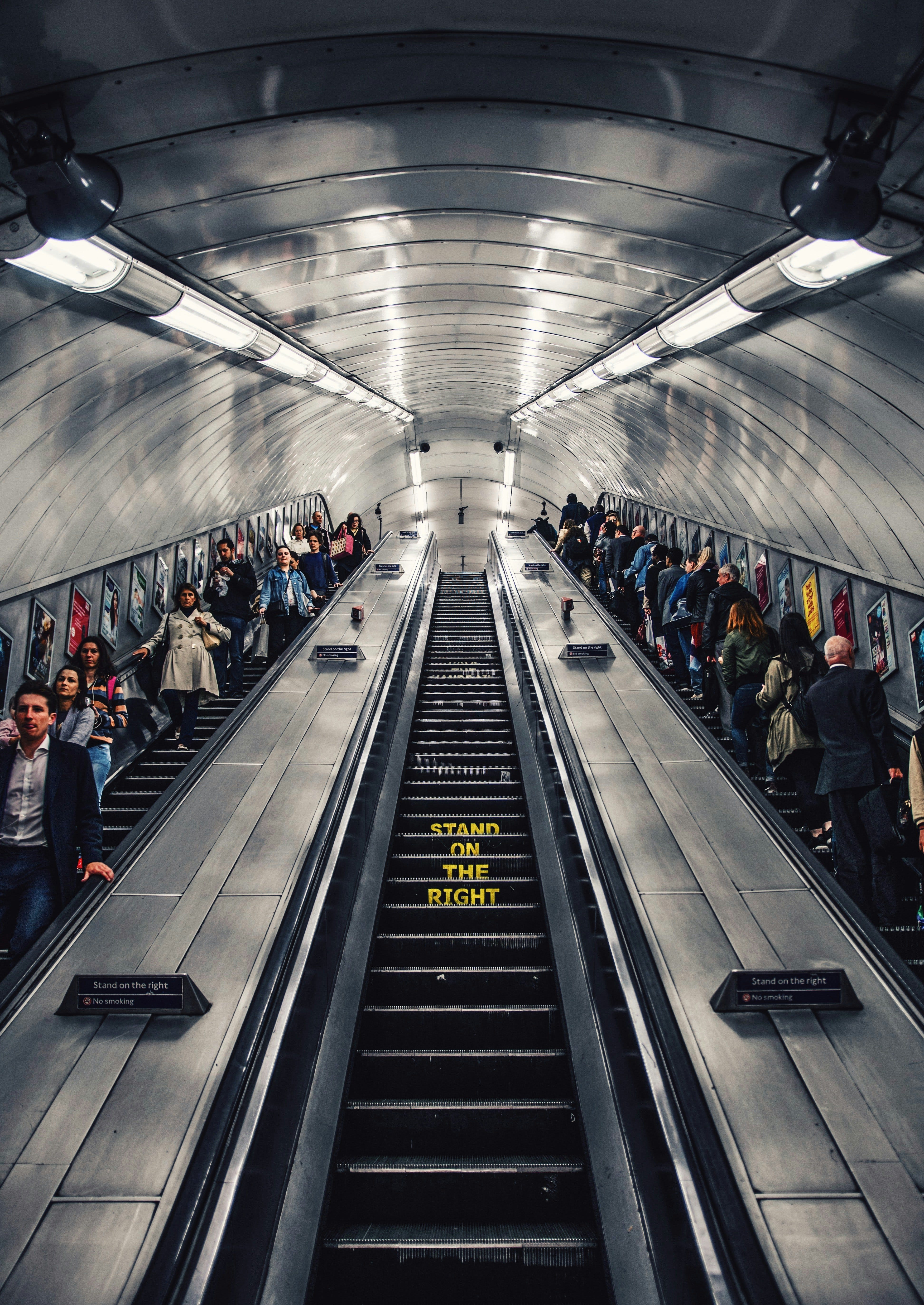
The next time you visit a new city, look around. Do you notice a lack of accessibility measures? Do you see disabled people earning a living wage? Do you see disabled people existing in broad daylight among the general public?
These are all telltale signs of the society they foster.
3) The undignified life of people with disabilities
In this novella, Saou gives clear examples of how disabled people are perceived to live undignified lives by their able-bodied counterparts (and even themselves) through three means:
Money
Sex
Dreams


Hyper-productivity in society often comes hand-in-hand with valuing people based on the money they make. Thus, it is unfathomable that a person could just exist without ever making monetary contributions to the country, let alone receive monetary assistance from the people’s tax money. This sentiment is not unique to Japanese society, but exists in all parts of the world.
Shaka’s late parents must have known this, which is probably why they worked tirelessly towards a massive inheritance for her. On top of that, they even established her as the landlord for the home care facility. Even so, there are rotten people like Tanaka who will look at Shaka and think she didn’t deserve her wealth, but this speaks to a wider discussion on hyper-productivity which I will not expand.
Describing herself as a hunchback monster, Shaka doesn’t feel entitled to sexual experiences with other people, outside of her fantasies which she publishes online. This is further enhanced when she quietly notes that Tanaka was only willing to impregnate her for a fat cheque. In fact, when they engage in the act, Shaka wonders if he felt any form of humiliation when she sexually aroused him. She refuses to look at his face for this reason.
Throughout the story, Shaka echos her desire to live a life like a ‘normal woman’. It’s interesting that among all things, she is obsessed with the experience of getting an abortion. I believe this was intentional by Saou. There is still a lot of taboo on abortion rights and anyone that supports them or has done the procedure are often labelled as ‘baby killers’. Even Shaka has referred to the act as such.
This yearning to live even the ‘lowest life’ an able-bodied person could live, reflects just how undignified Shaka felt living with a disability. She even admits this at the end of the book; she refers to living unapologetically as a disabled person as the ‘real Nirvana’ and confesses that she had not yet arrived.
The Other Shaka
Where the story of Shaka the hunchback monster ends, a short glimpse of Shaka the sex worker emerges.
Initially, I didn’t know what to make of this random scene between an aging man and a sex worker who is also named Shaka at the end - like, it just came out of nowhere?
And shockingly, among the line-up at the brothel (?), Shaka’s profile displayed a star mark alongside her headshot - this means clients can expect to get straight down to it with no restrictions of a condom and be guaranteed a creampie.
“What are you doing working a slutty job like this, when you’re so smart and so beautiful?”
Even more shocking is this backhanded question posed by the man had triggered an old memory. This Shaka’s brother was in prison for murdering a female resident of a nursing home where he worked as a carer. All Shaka knew of her was her “slightly unusual name and the slightly unusual name of her illness”.
Yet, this woman haunted her from time to time, and her only refuge is to write a story where her brother’s victim assumes is the protagonist with her name.
I guess that, someday, I’ll conceive the child that Shaka wanted to kill so that she might become a person. Maybe that someday is - now.
On Sex Work (and MORE disability!)
It’s pretty obvious that sex work is the secondary theme in this novella.
Truth be told, that last scene and line left me really dumbfounded - was everything just a fragment of this sex worker Shaka’s imagination? OR… OR… was this Shaka just another one of the hunchback Shaka’s characters in her erotica?
I had to sit on them for a good 2 hours before it finally dawned on me…
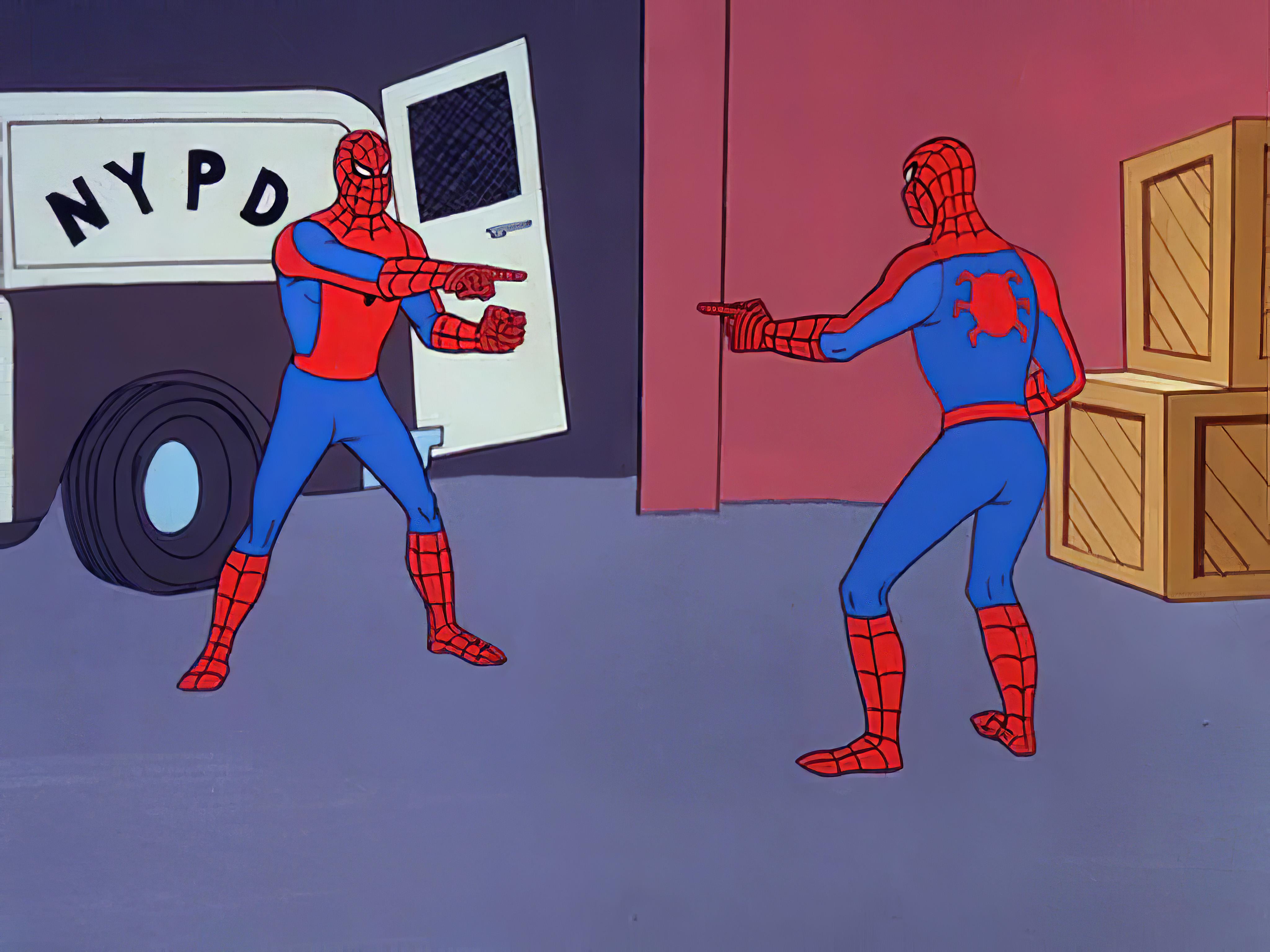
Now, there are two ways to go about this:
Shaka the hunchback monster is the real Shaka
Shaka the sex worker is the real Shaka
No matter which way you prefer, both scenarios offer poignant insights, which makes Hunchbank so powerful.
1) Shaka the hunchback monster is the real Shaka
I think this is the more straightforward of the two.
It implies that after her near-death experience, Shaka resumes her life as usual - staying within the facility and writing erotica. This means that final line was her feeding the main character (which she named after herself) with her own desires. She believes this is the only way she can live out her dream.
And the fact that this character’s brother had murdered a woman whose circumstances resemble that of Shaka’s reflects her own feelings about Tanaka. He ‘killed’ her when he left as he was her only way of fulfilling her dream of being a ‘normal woman’.
The fictional version of Tanaka stealing the deceased woman’s bank book and seal was an interesting alteration of reality. I believe she was disappointed that Tanaka didn’t take the cheque she had written him, as it means he pitied her. Hence, this alteration was a defense mechanism on her part.
Honestly, it’s very likely that this is the correct interpretation as the font used for Shaka the sex worker’s scene is the same as the one in the swingers scene at the start of the story (a literary tool used to distinguish between fiction and reality) - it implies that this too, is one of Shaka’s erotica drafts. However, I am leaning towards the second interpretation as it reaffirms the novella’s themes on disability.
2) Shaka the sex worker is the real Shaka
If the second interpretation is true and Shaka the sex worker is indeed the real Shaka writing a story about a fictional Shaka with a similar disability to her brother’s victim, then her existence itself further amplifies the notion that disabled people are invisible in a hyper-productive society.
Because, after all, what says invisible more than having someone without your circumstances write your story?
The fact that she made her fictional, disabled Shaka dream of the life she had to settle for (being a sex worker to support herself financially) exposes her perception of disabilities.
They couldn’t possibly prefer that over this.
Otherwise, it could be her way of removing the shame she felt about her life circumstances. She wanted—no, needed—to believe that her life could be someone else’s dream. If not, what kind of life is she living?
This, to me, is a clear reference to the treatment and perception of sex workers in today’s societies.
Saou Ichikawa was criticising everyone… including us
Lastly, how many of us approached the novella all giddy, thinking we’d see some heavy bedroom action between Shaka and Tanaka?
And how many of us felt a bit let down when there was only one proper sexual encounter between them, and a short one at that?
We can blame the synopsis for setting a certain expectation, but I believe this was intentional.
This was Saou Ichikawa’s aha moment to every able-bodied person who only participates in disability discourse when they’re exciting, probably raunchy and fun.
We feel Saou staring at us right in the face and saying, “It’s not fun. Having a disability in a hyper-productive society is a real struggle and you need to acknowledge that no matter how uncomfortable it makes you feel”.
Her bold move reminded me of Isaac’s speech in Sex Education’s Season 4 Episode 7.
P/S: I wish I bought this cover
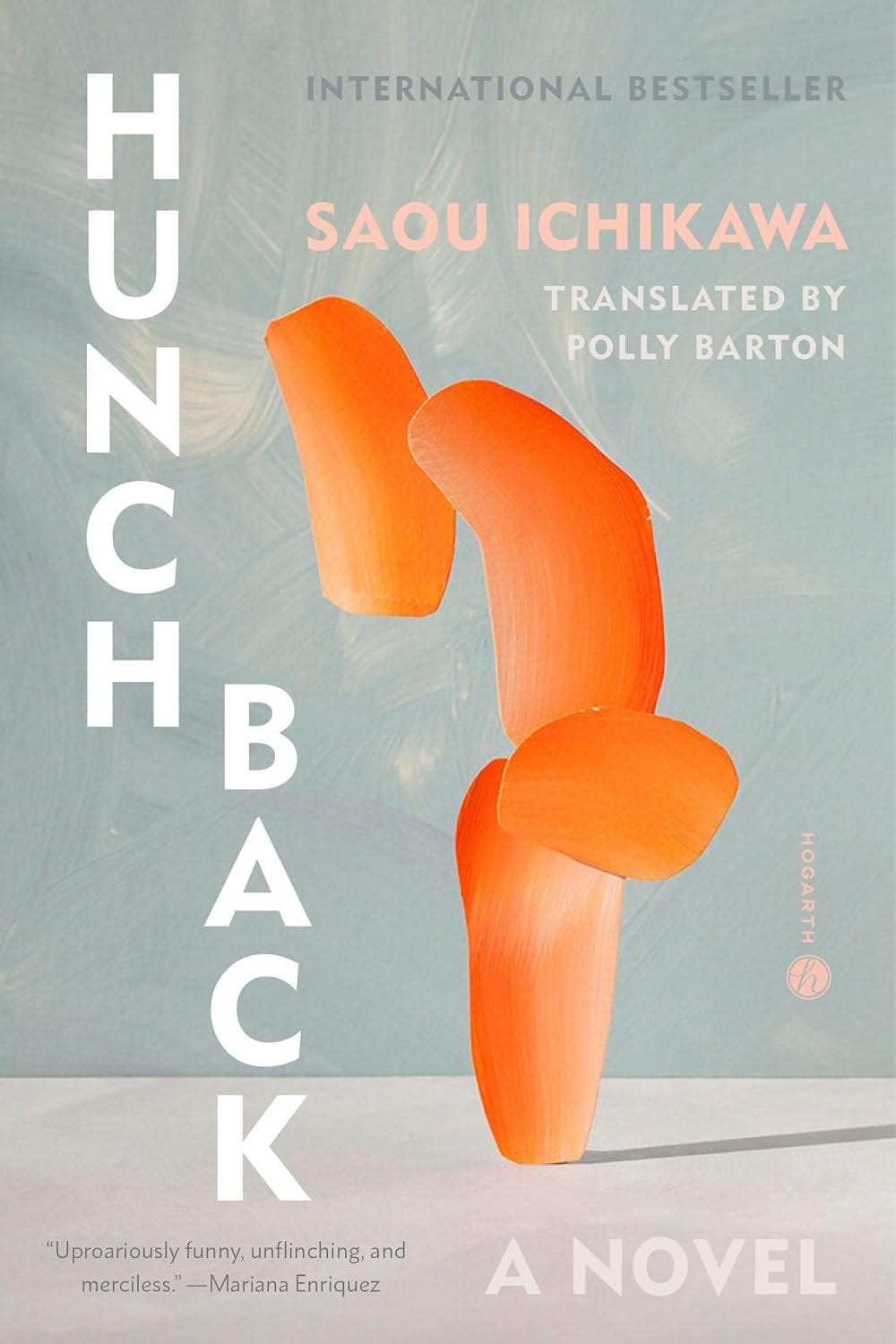
Have you read Hunchback? Did you come to the same conclusions as me?
I’d love to hear your thoughts on this thought-provoking novella.
loved this book and this piece
I just finished reading this book, and my initial interpretation was the first of the two you presented: Disabled Shaka, who writes and reads erotica and lives an online life, is the real Shaka. Like you said, it's the more straightforward one. But the second one makes sense as well, since the book starts and ends with the mysterious "I", revealed to be named Shaka at the end.
Obviously, this duality is intentional, and the interpretation seems to be left to the readers. It's kinda genius if you think about it. Regardless of your interpretation (and the relevant social commentary), the book does make you uncomfortable with its visceral descriptions and leaves you thinking about the universal human condition of not being content with their life.
Neither of the two Shakas is happy about the life they lead. None of the other characters seems satisfied with their lives either: Tanaka with his money problems, one of the nurses with struggles of raising children, and a disabled man's disappointment about the lack of sexual relief. Everyone wants something they no longer have, whether they are able-bodied or disabled.
I love how the novella has sewn together so many different social topics into less than 100 pages without feeling like a messy read.